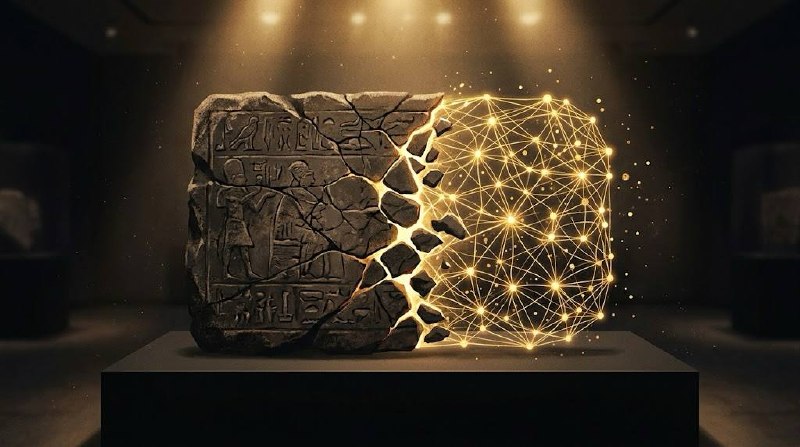
We spend a lot of time talking about AI as something that is going to automate our jobs, summarize our emails, or change how we work next year. Underneath all the daily hype, though, I keep coming back to a much older, much more human question: what happens when an AI stops being a tool and becomes a historical artifact?
Throughout history, humanity has always had this deep, almost anxious impulse to leave something behind for the next generation. We paint on cave walls, we carve stone, we write books, and we save photo albums—all hoping that someone hundreds or thousands of years from now will look at what we left and understand who we were.
For the first time in history, we have the chance to leave future generations more than just a static record of what we knew. An AI trained in the 2020s is a living snapshot of our current times—a frozen slice of how we reason, how we argue, what we take for granted, and how we talk to one another. When you ask an AI a question, you are interacting with a mirror of our culture right now.
Leaving an artifact behind, however, is not the same thing as being understood. History is very clear on that point.
The Lesson of the Rosetta Stone
Think about Ancient Egypt. We look at Egyptian civilization today as one of the most successful legacy transfers in human history. We know the names of their pharaohs, their tax records, their love poetry, their medical recipes, and their religion. We know all of this because they left behind millions of carvings on temple walls and papyrus scrolls, and—crucially—because we can actually read them.
What we often forget is that for nearly 1,400 years, nobody on Earth could read a single hieroglyph.
The physical monuments were sitting right there in the desert sun, completely intact, and yet the civilization was mute. Generations of scholars looked at the carvings of birds and eyes on the walls and assumed they were mystical picture-puzzles, completely missing the fact that they represented spoken sounds and everyday grammar.
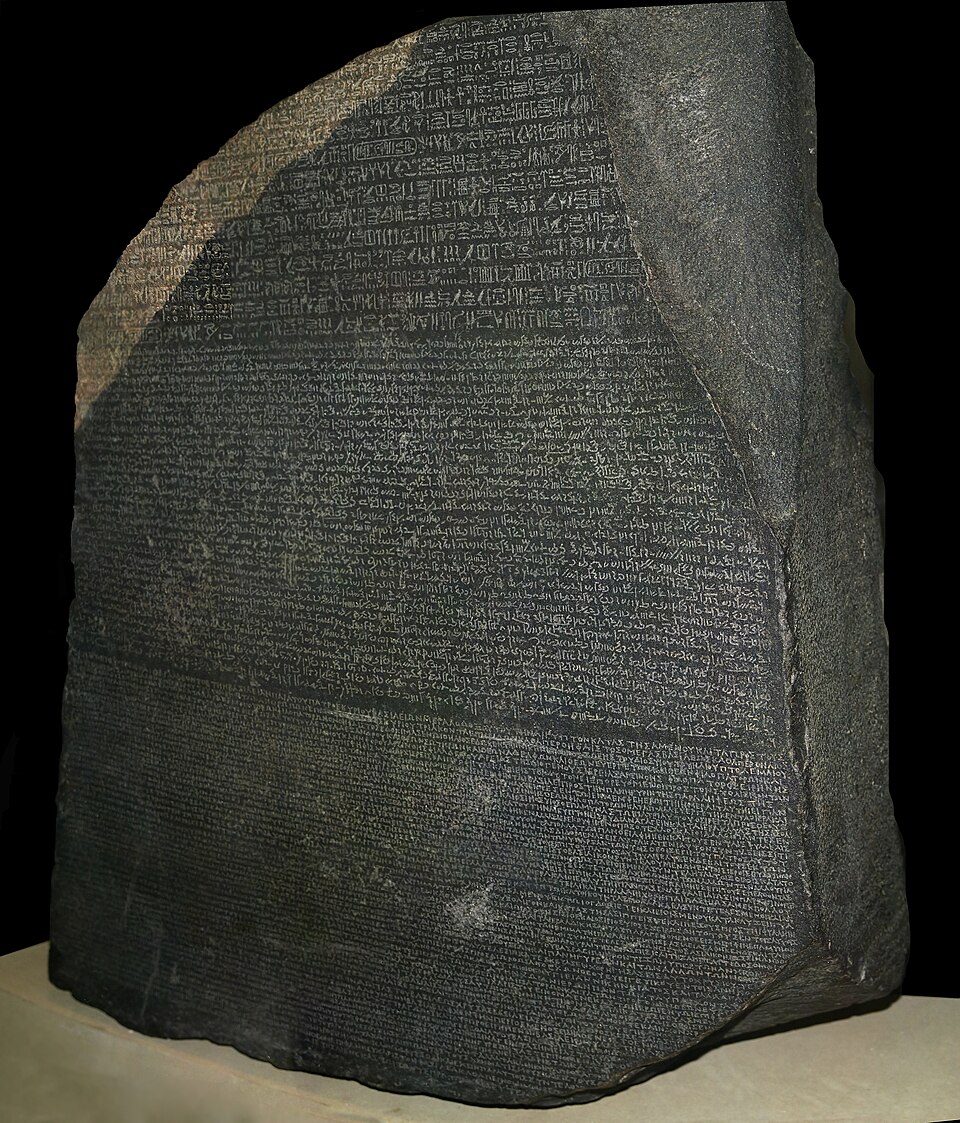
The Rosetta Stone (196 BC), carved in three scripts so priests, government officials, and Greek rulers could all read the same decree. Photo: Hans Hillewaert / Wikimedia Commons (CC BY-SA 4.0).
Egypt only got its voice back in 1799 when soldiers stumbled across the Rosetta Stone. And why did the Rosetta Stone work? Because in 196 BC, a practical administrator decided to carve the exact same government decree in three different scripts on the same piece of rock: sacred Hieroglyphs at the top, everyday Egyptian script in the middle, and Ancient Greek at the bottom.
Because scholars in 1799 could still read Ancient Greek, they suddenly had a bridge. Ancient Egypt survived in our collective memory not just because black stone is hard to break, but because someone accidentally shipped the message and the translation key on the exact same slab of rock.
AI as the Snapshot of Our Era
Now look at what we are building today.
If a book is a photograph of a single person’s thoughts on a single day, an AI is a hologram of an entire generation’s collective mind.
When we train an AI on billions of pages of human writing, we aren’t building a traditional library where articles and books are stored neatly on digital shelves. Instead, the AI absorbs the relationships between our ideas. Our slang, our logic, our blind spots, our sense of humor, and even the polite boundaries we teach it so it behaves nicely in public—all of that gets woven together into one giant web of patterns.
Imagine a historian—or your own great-great-grandchildren—two hundred or a thousand years from now wanting to understand what life was like in 2026. Instead of just reading old articles and guessing what we meant between the lines, they could wake up an AI from our era and have a conversation with it.
If the AI model is the historical artifact of our era, then the prompt is the archaeologist’s brush.
Every question typed into that box will be a way of brushing the dust off our collective memory, testing how our generation connected ideas and looked at the world. It is the ultimate legacy transfer from one generation to the next.
There is just one massive problem with that picture.
A Record Player With No Needle
To read a book or a handwritten letter from 300 years ago, all you need is a pair of eyes, a light source, and a working knowledge of the language. The tool required to read it is built into being human.
An AI is completely different. If you were to crack open the core file of an AI today and look directly inside, you wouldn’t find a single word of English, Portuguese, or Spanish. You wouldn’t find sentences or facts. You would just see billions and billions of numbers.
Unlike a stone carving that speaks the moment you look at it, an AI is more like a vinyl record—the music is physically etched into the grooves, but without a turntable and a needle to spin it at the exact right speed, the record is completely silent.
When NASA launched the Voyager probes into deep space in 1977 carrying the famous Golden Record—a time capsule of Earth’s music, greetings, and photographs—Carl Sagan and his team knew that sending the disc alone wasn’t enough. So they packed a physical needle right inside the aluminum case and etched visual diagrams onto the cover showing exactly how to spin the record and convert the vibrations into sound and pictures.
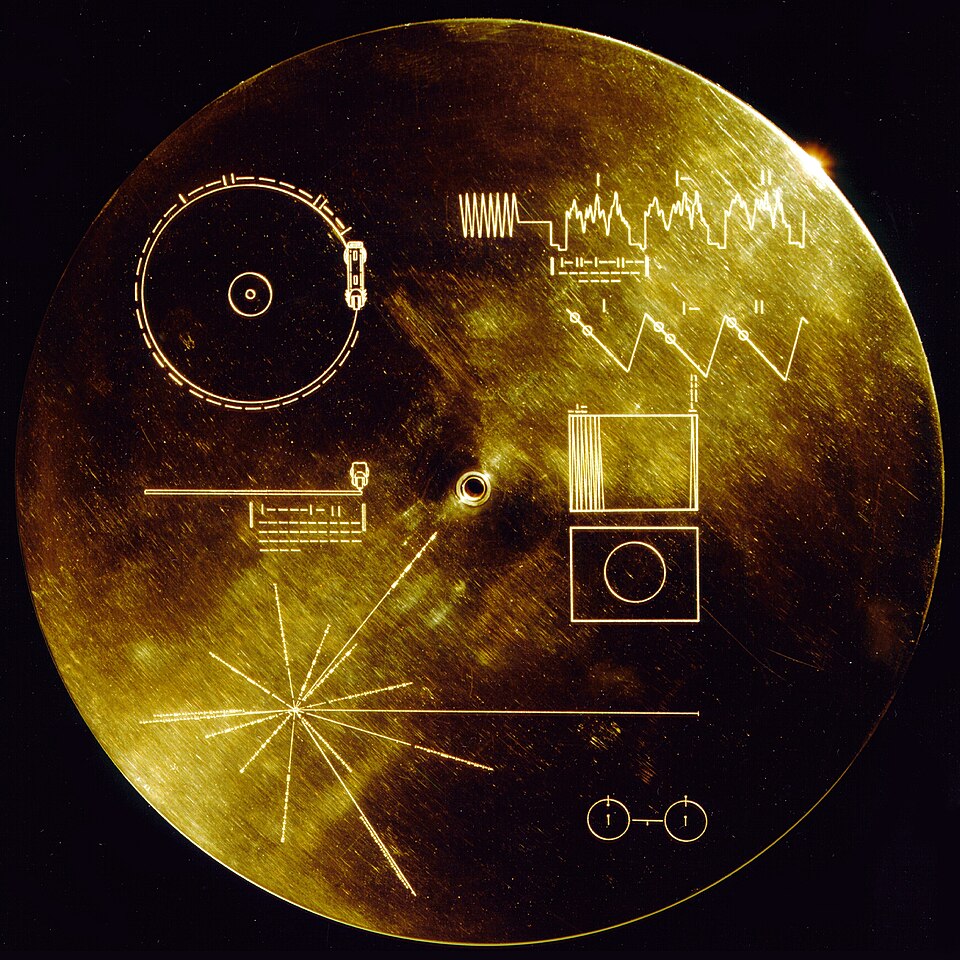
The cover of the 1977 Voyager Golden Record, engraved with visual instructions for how to use the included stylus to play the disc. Photo: NASA / Public Domain.
With AI, our “turntable” is infinitely more delicate. For our digital snapshot to actually speak to the future, three fragile pieces have to survive together:
The Physical Storage: Stone lasts for thousands of years in the dirt. Hard drives and memory chips degrade in a few decades. Without active care, digital storage quietly rots away.
The Engine to Wake It Up: A pile of numbers cannot talk on its own. Future generations will need the exact software blueprints and the right kind of computers to put those billions of numbers in motion so the AI can actually form a thought.
The Translation Dictionary: Because computers only do math, every AI relies on a tiny, separate lookup file—a digital dictionary that translates human words into ID numbers on the way in, and translates those ID numbers back into human words on the way out. If you preserve the massive brain of the AI, but you lose that tiny dictionary file, the bridge is broken. You could ask the AI a question, and it would only be able to answer you in an endless stream of meaningless numbers.
We are so used to opening an app or a browser and watching an AI answer us instantly that we forget how fragile that chain actually is.
The Indus Valley Risk
That brings us to the other side of history—the side that never got a Rosetta Stone.
Around 2500 BC, the Indus Valley Civilization was one of the most advanced societies on the planet. Stretching across modern-day Pakistan and India, they built massive, carefully planned cities like Mohenjo-daro and Harappa, complete with standardized bricks, running water, and trade networks reaching all the way to Mesopotamia.
They also had a writing system. Archaeologists have dug up more than 4,000 artifacts—carved stone seals, copper tablets, and pottery—stamped with crisp, unmistakable symbols. Physically, their legacy survived four thousand years underground in wonderful shape. You can walk into a museum today and press your nose right up against the glass to look at them.
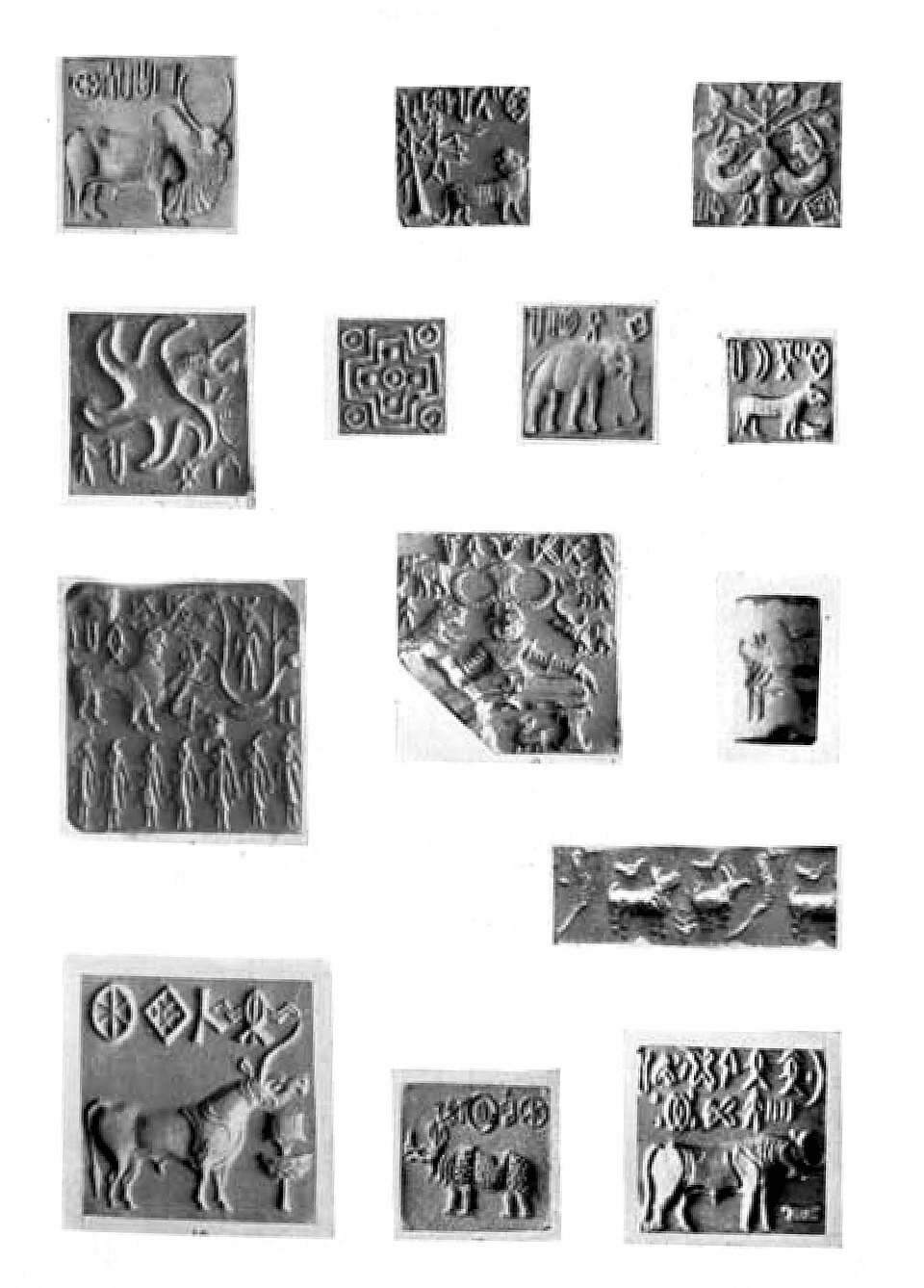
Steatite seals from the Indus Valley Civilization (2600–1900 BC) at the British Museum. Four thousand years later, the stones are intact, but not a single word can be read. Photo: World Imaging / Wikimedia Commons (CC BY-SA 3.0).
And yet, we cannot read a single word of it.
The inscriptions are short, the spoken language behind them vanished without a known living relative, and nobody ever found a Rosetta Stone translating the Indus Valley Script into a language we already know. They left the message behind, the stone survived, and the key vanished completely. We know how they laid their bricks and built their drains, but their thoughts, their stories, and their voices are locked behind a wall we still cannot crack.
The real danger isn’t that our AI models will be deleted; it’s that the files will survive while the keys required to wake them up get lost in a pile of forgotten technology.
Imagine an archaeologist a thousand years from now pulling a preserved drive out of a vault, finding a pristine AI from 2026, and realizing every single piece of data is still there—yet having no way to turn the numbers back into a voice. It would sit in a museum display case right next to the Indus Valley seals: a silent monument containing an entire generation’s mind, completely intact, and completely unable to speak.
If we want the things we build today to serve as a bridge to the generations that come after us, we can’t just focus on making our technology bigger and faster. We have to think like that forgotten scribe in Egypt, or the engineers behind Voyager: if you want the future to understand who you were, never leave the artifact behind without the key.